


Flora Druryand
BBC Indonesian
 Reuters
The death toll in floods that hit Indonesia last week has risen to more than 500, with rescue teams still struggling to reach affected areas.
The floods, which were caused by a rare cyclone that had formed over the Strait of Malacca, hit three provinces and affected about 1.4 million people, according to the government’s disaster agency.
Another 500 people remain missing and thousands more have been injured.
Indonesia is just one part of Asia that has been hit by torrential rain and storms in recent days, with Thailand, Malaysia and Sri Lanka also reporting deaths.
In Indonesia, the provinces of Aceh, North Sumatra and West Sumatra have been the worst affected, with thousands of people still isolated and without critical supplies.
Arini Amalia, a resident of Pidie Jaya Regency in Aceh, told the BBC that the floods had been “like a tsunami”.
“According to my grandmother, this is the worst, the worst of her life,” Amalia said.
Aid workers have been trying to reach people on foot and by motorcycle, as many roads are impassable for larger vehicles.
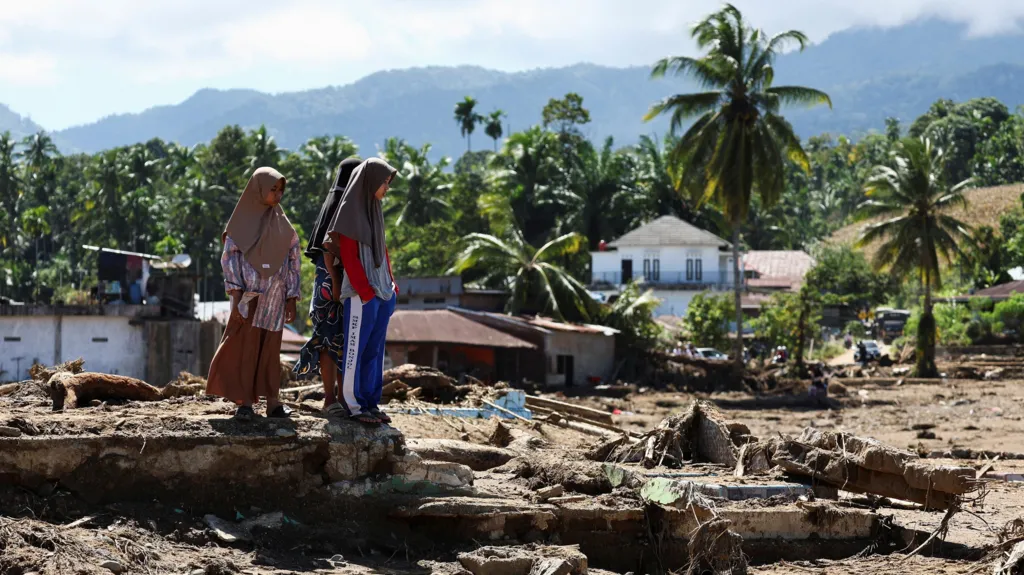
Photographs from the region show washed out bridges, roads covered in mud and debris, and piled up logs.
At the Twin Bridges landmark of West Sumatra, where floods washed away and deposited huge amounts of mud and debris, Mariana watched as bulldozers cleared the roads, hoping to find her missing relatives, including her 15-year-old son.
“Watching the bulldozers, seeing how thick the mud is… I keep thinking, what condition will my son be in when they find him?” she said. “Will it still be intact? My mother, my brother-in-law… Seeing how things are here, perhaps their faces will no longer be recognizable.”

 BBC / Silvano Hajid
Many are still waiting for food aid and some say they have not eaten in two or three days.
Maysanti, who lives in Central Tapanuli, one of the worst-affected areas in northern Sumatra, told the BBC that aid workers were having trouble reaching his district.
“Everything is gone; our food supplies are running out. We can’t eat,” he said. “Now they are even fighting over instant noodles. We have run out of food; we need food and rice. Access to us is completely cut off.”
He said he has to walk miles from his house to get an internet connection and basic necessities such as drinking water.
In Central Aceh, where local authorities have provided Starlink devices, thousands of people were seen queuing outside the regency office on Sunday night hoping to contact loved ones or charge their mobile phones.
“It’s been five days without signal. We’ve been waiting since yesterday in case the network comes back. I’m thinking of calling my mother in Banda Aceh, but so far I still can’t reach her,” said a resident named Mar.

As rescue efforts continue, anger has begun to grow toward the government’s response to the disaster.
Critics say authorities were unprepared for the flooding. Some have blamed bureaucracy for slowing down the distribution of food aid.
On Monday, President Prabowo Subianto, who was visiting some of the flood-affected areas in northern Sumatra, acknowledged that some roads remained closed, but added that “we are doing everything possible to overcome the difficulties.”
“We face this disaster with resilience and solidarity,” he continued. “Our nation is strong right now and capable of getting through this.”


