


 fake images
Hong Kongers are voting in an election seen as a test of public sentiment after a deadly fire that angered some in the city.
The government has mounted a huge campaign to encourage Hong Kongers to elect members of the Legislative Council (LegCo). All candidates have been vetted to ensure their loyalty to China.
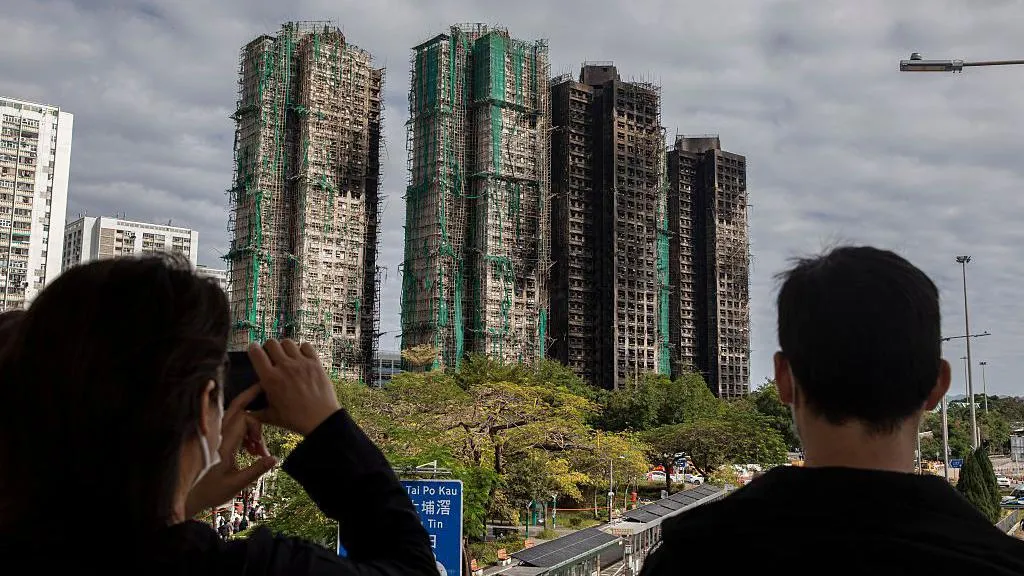
The election takes place as many mourn the Tai Po fire last month, which killed nearly 160 people.
In recent days, authorities have distributed aid to survivors, arrested suspects and tried to improve building security, as some Hong Kongers raise questions about the incident.
A total of 161 candidates are competing for 90 seats in the LegCo, which acts as a mini-parliament and can draft and amend laws.
The election is the second since 2021, when China made sweeping changes to Hong Kong’s electoral system to ensure only “patriots” could run for seats.
Beijing has said the changes, which were implemented shortly after the 2019 protests, were necessary to ensure stability in Hong Kong, but critics say they weakened democracy.
The latest poll, which took place shortly after those changes, recorded the lowest turnout in its history: 30% amid widespread voter apathy.
This year, the government has covered the city with posters urging Hong Kongers to go to the polls, while offering freebies and shopping discounts.
After casting their vote, each person will receive a “thank you card” that they can exchange for vouchers at selected shops and restaurants, or for beauty services, medical check-ups and insurance policy premiums.
Authorities also offer free admission to public pools and museums on Election Day, organize carnivals in several neighborhoods, and hold a televised variety show and gala.
They’ve also created cartoon mascots and an election theme song, adapted from a 2001 hit song by Cantopop star Aaron Kwok, called “Let’s Vote, Together We Create The Future.”
Chief Secretary Eric Chan told reporters last month that the measures were aimed at ensuring “a happy and festive atmosphere” and “allowing residents to recognize the importance of the elections.”

 VCG via Getty Images
But in recent days the city has focused on the Nov. 26 fire that engulfed high-rise residential blocks in Wang Fuk Court in the northern district of Tai Po.
The fire was the worst seen in Hong Kong in more than 70 years. The death toll, which currently stands at 159, is likely to rise further as officials continue to recover bodies.
As Hong Kong mourns its dead, some wonder whether the fire could have been prevented and question building safety standards. Many Hong Kongers live in old high-rise buildings similar to Wang Fuk Court.
Authorities have since ordered the creation of an independent committee to investigate the cause of the fire and arrested 13 people for alleged manslaughter.
They have also ordered the removal of scaffolding mesh used in all building renovations in the city. Investigators found that a scaffold mesh used for renovations at the Wang Fuk courthouse did not meet flame retardant standards and that the fire spread quickly due to the mesh and other flammable materials on the buildings’ exterior.
Authorities have also moved quickly to quell dissent. Police reportedly detained a man, who was part of a group calling for an independent investigation, on suspicion of sedition on Saturday. The petition was also deleted from the Internet.
Police also detained two other people, including a former district councillor.
The political campaign for the Legislative Council elections was suspended immediately after the fire, although debate forums organized by the government resumed after a few days. Carnivals organized for the electoral campaign have also been cancelled.
Hong Kong Chief Executive John Lee has insisted that the LegCo elections go ahead as planned, as “we must move forward before we can turn our pain into strength.”
He said the new lawmakers will be able to quickly support reconstruction and reforms.
John P. Burns, a professor emeritus and expert on Chinese politics at the University of Hong Kong, said he believed the government would interpret high turnout as a sign that voters perceive Hong Kong’s reformed political system as “relatively legitimate.”
But he expected the numbers to be low, partly because of the Tai Po fire.
He noted that the majority of Hong Kongers have traditionally supported the pan-democratic opposition, which has been effectively banned from participating. “I think this time they won’t be convinced to participate, just like in 2021 they mostly stayed away,” he said.
Mobilizing pro-establishment voters after the fire would also be difficult for the government, he added.
Some in that camp will be impressed by the speed with which the authorities have rehoused those left homeless by the fire and the help the authorities have provided, “which by any measure has been prompt and relatively generous,” Professor Burns said.
But others “may stay away from the polls” because they are “disappointed, even angry, by the governance problems that the fire has revealed,” he said.
Hong Kong’s national security office this week republished a comment from a pro-Beijing media outlet urging residents to vote to show support for the government’s reconstruction efforts.
“Jointly building a good future begins with this vote. If you really love Hong Kong, you must vote sincerely,” the comment said.
 VCG via Getty Images
This year’s LegCo election will feature a number of new faces, with around a quarter of sitting lawmakers resigning.
Local media have reported that Beijing pressured several lawmakers to retire as they had unofficially set an age limit.
Several of those who resigned are over 70 years old, including prominent politician Regina Ip, a former security chief nicknamed the “Iron Lady.”


